We offer FREE SHIPPPING on all orders!
We offer FREE SHIPPPING on all orders!
| THIS PRODUCT IS INTENDED AS A RESEARCH CHEMICAL ONLY. This designation allows the use of research chemicals strictly for invitro testing and laboratory experimentation only. All product information available on this website is for educational purposes only. Bodily introduction of any kind into humans or animals is strictly prohibited by law. This product should only be handled by licensed, qualified professionals. This product is not a drug, food, or cosmetic and may not be misbranded, misused or mislabeled as a drug, food, or cosmetic. |
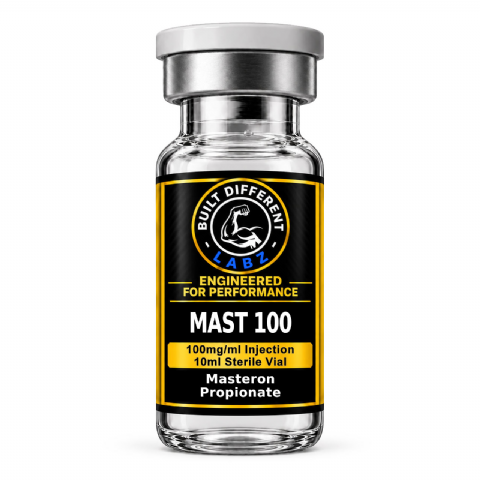
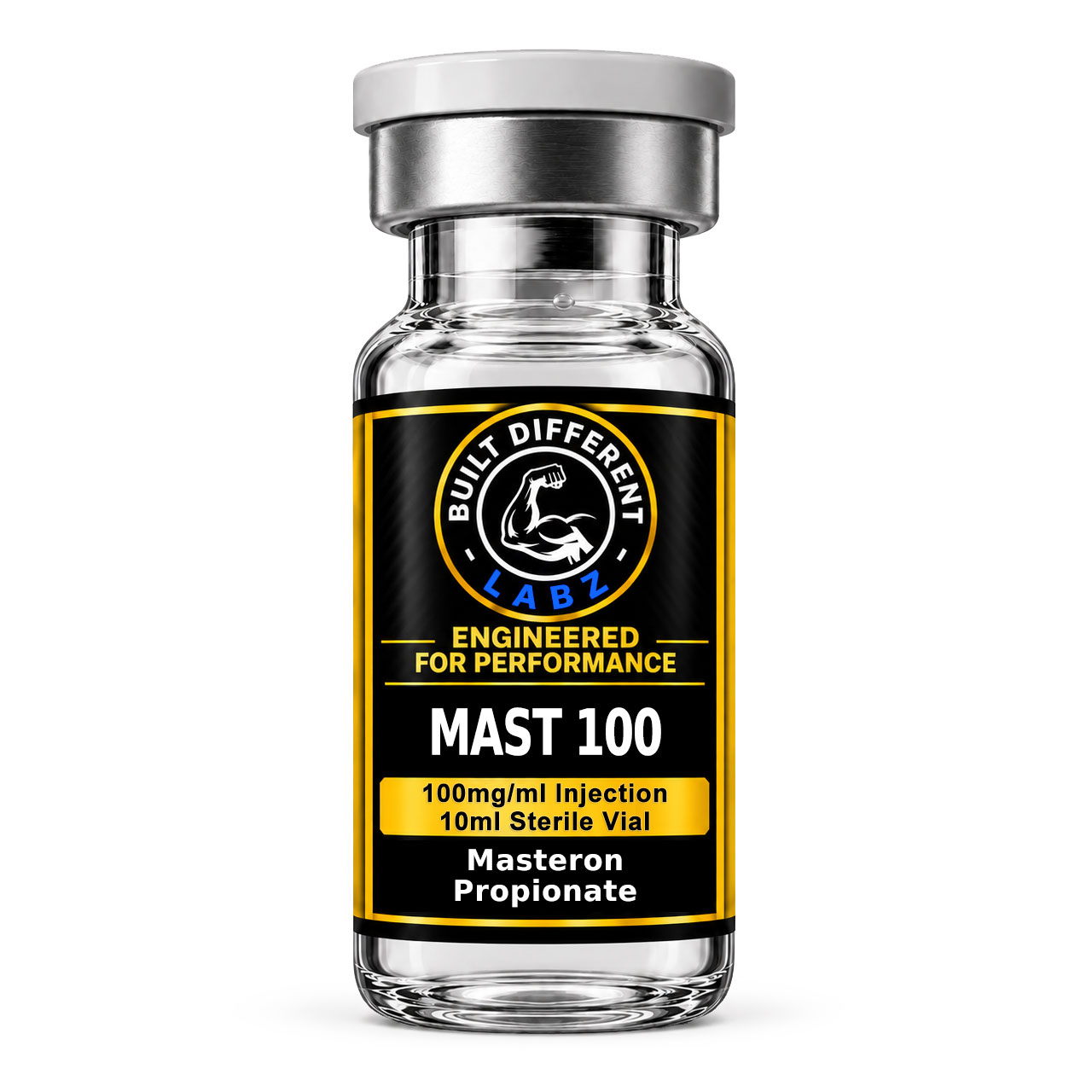
Masteron Propionate 100 is an injectable anabolic-androgenic steroid preparation commonly formulated to contain 100 mg of drostanolone propionate per milliliter. "Masteron" is the name historically associated with drostanolone, a synthetic derivative of dihydrotestosterone (DHT).
The propionate ester gives drostanolone a relatively short release profile compared with longer esterified versions. Unlike testosterone, drostanolone does not aromatize into estrogen.
The active compound is drostanolone propionate.
Drostanolone is a DHT-derived anabolic-androgenic steroid. Attaching a propionate ester delays its release after injection compared with unesterified drostanolone.
Once the propionate ester is removed, active drostanolone can bind to androgen receptors in skeletal muscle and other androgen-responsive tissues.
The propionate ester primarily changes pharmacokinetics rather than the fundamental activity of drostanolone.
A concentration of:
Drostanolone Propionate: 100 mg/mL
means that each milliliter contains 100 mg of the complete esterified compound.
The propionate ester contributes part of that molecular weight. Based on molecular weights, drostanolone propionate is approximately 80% drostanolone by weight, so 100 mg of drostanolone propionate represents roughly 80 mg of drostanolone after accounting for the ester.
This is a chemical comparison rather than a dosing recommendation.
Drostanolone propionate has a history of legitimate human pharmaceutical use.
It was historically marketed under names including Masteron and was used in the treatment of certain forms of advanced breast cancer.
Its historical medical application was related in part to its androgenic and anti-estrogenic characteristics.
Modern cancer treatment has largely replaced drugs such as drostanolone with more targeted therapies. Drostanolone is not currently an FDA-approved medication in the United States.
Drostanolone interacts with androgen receptors.
Androgen-receptor activation influences gene transcription in responsive tissues and can affect protein metabolism, nitrogen balance, skeletal muscle, skin, hair follicles, reproductive tissues, and other systems.
Drostanolone has both anabolic and androgenic activity, although its pharmacological profile differs considerably from testosterone and trenbolone.
Drostanolone has anabolic activity and can support the maintenance or development of lean tissue through androgen-receptor signaling.
It nevertheless has a reputation for producing less dramatic increases in overall body mass than some other anabolic steroids.
Part of this reputation comes from the fact that drostanolone does not aromatize and therefore does not produce estrogen-mediated water retention.
Changes in scale weight or visible fluid retention, however, should not be confused with the actual degree of anabolic activity or health risk.
Masteron is frequently described in bodybuilding culture as producing a "hard," "dry," or more defined appearance.
These descriptions are largely physique terminology rather than formal pharmacological outcomes.
Drostanolone does not directly aromatize into estrogen, so it generally does not produce the estrogen-associated fluid retention that can accompany substantial testosterone exposure.
Consequently, changes in muscle definition may be more visually apparent in someone who already has relatively low body fat.
Drostanolone itself is not a fat-burning medication, and it does not independently create low body fat.
Both formulations ultimately deliver the same active steroid: drostanolone.
The difference is the ester.
Drostanolone Propionate uses the shorter propionate ester and has a comparatively faster release.
Drostanolone Enanthate uses a larger enanthate ester and consequently provides a more prolonged release.
Once their respective esters have been removed, the active molecule is the same.
Drostanolone and testosterone are fundamentally different compounds.
Testosterone is the body's principal endogenous androgen and can be converted into estradiol and DHT.
Drostanolone is a synthetic DHT-derived anabolic steroid.
It does not function as complete physiological testosterone replacement even though it activates androgen receptors.
This distinction is important because drostanolone can suppress endogenous testosterone production while failing to replace all of testosterone's normal physiological functions.
Drostanolone does not aromatize into estradiol.
Consequently, estrogenic effects resulting directly from conversion of drostanolone into estrogen are not expected.
This generally means drostanolone itself is not associated with the estrogen-mediated water retention characteristic of strongly aromatizing androgen exposure.
However, non-aromatizing does not automatically mean safer.
Estradiol performs important physiological functions in men involving bone, sexual function, cardiovascular physiology, and other systems.
Masteron is frequently described as having "anti-estrogenic" properties.
There is some historical basis for this characterization because drostanolone was developed and used in hormone-sensitive breast cancer treatment.
However, this should not be interpreted as meaning drostanolone functions as a modern aromatase inhibitor or estrogen-receptor modulator.
It should therefore not be considered a substitute for appropriate medical evaluation or treatment of an estrogen-related disorder.
Because drostanolone is DHT-derived, androgenic effects are an important consideration.
Potential effects include:
Hair loss can be particularly relevant for individuals genetically susceptible to androgenic alopecia.
A compound having relatively modest effects on body weight does not necessarily mean it will be mild on hair or skin.
Drostanolone can suppress the hypothalamic-pituitary-gonadal axis.
External androgen exposure creates negative feedback at the hypothalamus and pituitary, reducing LH and FSH secretion.
As LH declines, endogenous testicular testosterone production can decrease substantially.
Potential consequences include reduced natural testosterone, reduced testicular function, changes in libido, sexual dysfunction, and reduced testicular volume.
Suppression of LH and FSH can also interfere with normal sperm production.
Possible consequences include reduced sperm concentration, very low sperm counts, impaired fertility, and potentially azoospermia in some individuals.
Recovery after discontinuation varies and cannot reliably be predicted according to a fixed timeline.
Cardiovascular effects are an important consideration with drostanolone and other anabolic-androgenic steroids.
Potential changes can include:
A non-aromatizing steroid can still have significant cardiovascular effects.
In particular, the absence of estrogen-related water retention should not be interpreted as evidence that a compound is harmless to cardiovascular health.
Androgen exposure can stimulate red blood cell production.
Hemoglobin and hematocrit may consequently increase.
Significant hematocrit elevations can become clinically relevant, particularly when multiple androgenic compounds are involved.
A complete blood count can identify these abnormalities.
Injectable drostanolone propionate is not a conventional 17-alpha-alkylated oral anabolic steroid.
Its hepatic characteristics therefore differ from oral steroids specifically modified to survive extensive first-pass metabolism.
Nevertheless, abnormal liver tests during anabolic-steroid exposure still warrant medical investigation rather than being dismissed.
The prostate is androgen responsive.
Because drostanolone has androgenic activity, prostate-related symptoms remain relevant, particularly in individuals with pre-existing prostate conditions.
Urinary symptoms or other prostate concerns warrant appropriate medical assessment.
Androgens can affect the central nervous and reproductive systems.
Changes involving libido, mood, irritability, anxiety, or sexual function can occur during anabolic-steroid exposure.
Responses vary substantially among individuals.
Importantly, strong androgenic activity does not guarantee normal sexual function because endogenous testosterone and normal endocrine signaling can simultaneously be suppressed.
As an injectable preparation, drostanolone propionate carries risks independent of the steroid itself.
Potential complications include:
Products obtained outside regulated pharmaceutical channels introduce additional uncertainty involving sterility, contamination, actual concentration, and authenticity.
Potential adverse effects associated with drostanolone/AAS exposure include acne, oily skin, accelerated androgenic hair loss, suppression of endogenous testosterone, impaired fertility, changes in libido or sexual function, unfavorable cholesterol changes, cardiovascular effects, increased hematocrit, and injection-related complications.
Its inability to aromatize means direct estrogen-mediated effects are less characteristic, but that does not eliminate endocrine or cardiovascular risks.
Compound: Drostanolone Propionate
Common Name: Masteron / Masteron Propionate
Common Concentration: 100 mg/mL
Drug Class: Anabolic-androgenic steroid
Active Steroid: Drostanolone
Derivative: DHT-derived
Ester: Propionate
Release Profile: Relatively short acting
Approximate Drostanolone Content: About 80 mg drostanolone per 100 mg drostanolone propionate
Anabolic Activity: Yes
Androgenic Activity: Yes
Direct Aromatization to Estradiol: No
Progestogenic Activity: Not considered a major characteristic
Estrogen-Mediated Water Retention: Generally low from drostanolone itself
Suppresses Natural Testosterone: Yes
Can Impair Fertility: Yes
Historical Human Pharmaceutical Use: Yes
Current FDA Approval: No
Masteron Propionate 100 is a short-ester injectable form of drostanolone, a DHT-derived anabolic-androgenic steroid historically used medically and later associated heavily with bodybuilding.
Its major distinguishing characteristics are its androgen-receptor activity, inability to aromatize directly into estrogen, relatively short propionate ester, and lack of estrogen-mediated water retention. These characteristics account for much of its reputation for producing a "dry" or "hard" appearance rather than large changes in water-associated body weight.
However, the absence of aromatization does not make Masteron harmless. Drostanolone can still significantly suppress natural testosterone and fertility, accelerate androgenic hair loss, affect skin, adversely alter cholesterol and other cardiovascular risk factors, and produce complications associated with injectable or unregulated products.
We do not accept returns or issue refunds for any reason, beside manufacturing defects.
Feel free to contact us if you have any questions or concerns about our Return Policy.