We offer FREE SHIPPPING on all orders!
We offer FREE SHIPPPING on all orders!
| THIS PRODUCT IS INTENDED AS A RESEARCH CHEMICAL ONLY. This designation allows the use of research chemicals strictly for invitro testing and laboratory experimentation only. All product information available on this website is for educational purposes only. Bodily introduction of any kind into humans or animals is strictly prohibited by law. This product should only be handled by licensed, qualified professionals. This product is not a drug, food, or cosmetic and may not be misbranded, misused or mislabeled as a drug, food, or cosmetic. |
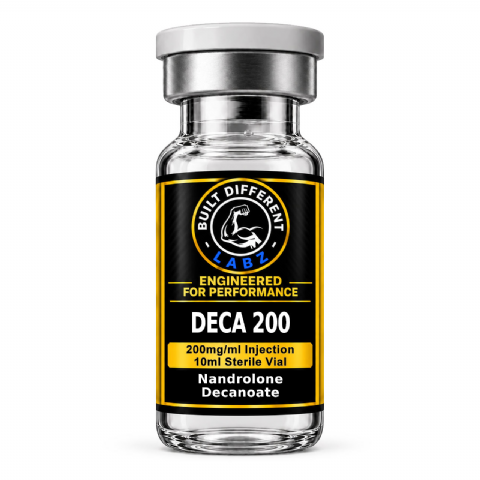
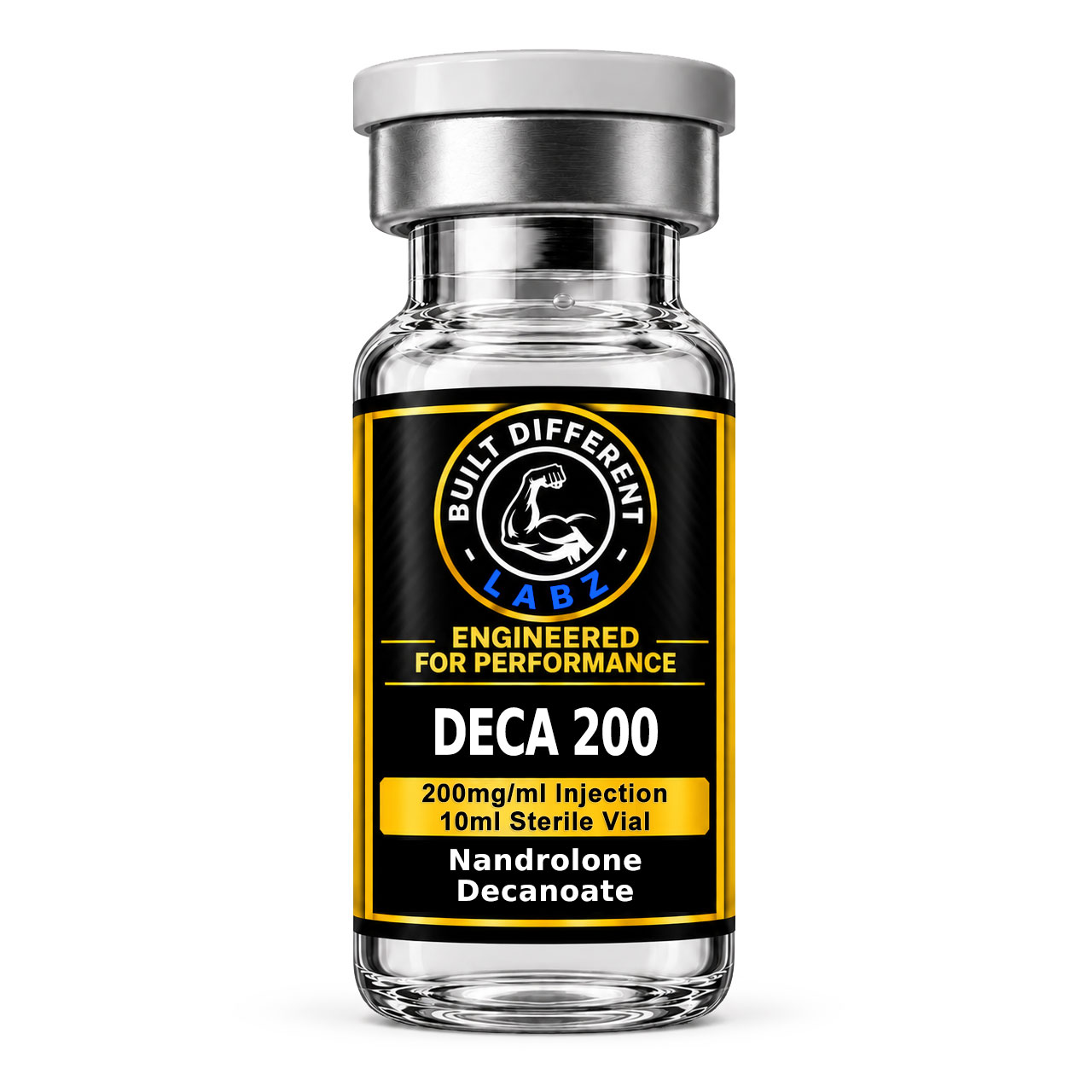
Nandrolone Decanoate 200 is a long-acting injectable anabolic-androgenic steroid preparation commonly formulated to contain 200 mg of nandrolone decanoate per milliliter. It is widely known by the historical brand name Deca-Durabolin, often shortened to "Deca."
Unlike several performance-enhancing compounds, nandrolone has a genuine history of human pharmaceutical use. However, nonmedical use at supraphysiologic exposure carries important cardiovascular, endocrine, reproductive, and sexual-function risks.
Nandrolone decanoate consists of the steroid nandrolone (19-nortestosterone) attached to a decanoate ester.
Nandrolone is structurally similar to testosterone but lacks the methyl group at carbon 19, placing it in the 19-nor anabolic steroid family.
The large decanoate ester slows release from the injection depot. After enzymatic removal of the ester, active nandrolone becomes available to interact with androgen receptors.
A concentration of:
Nandrolone Decanoate: 200 mg/mL
means that each milliliter contains 200 mg of the complete esterified compound.
The decanoate ester contributes part of that molecular weight, so 200 mg does not equal 200 mg of nandrolone base.
Nandrolone decanoate is approximately 64% nandrolone by molecular weight. Therefore, 200 mg of nandrolone decanoate represents roughly 128 mg of nandrolone, with the remaining mass coming from the ester.
This is a chemical comparison rather than a dosing recommendation.
Nandrolone decanoate was historically marketed as Deca-Durabolin and has been investigated or used medically for conditions involving anemia, wasting, osteoporosis and other situations where anabolic effects were therapeutically useful.
Nandrolone compounds have also been used medically in certain jurisdictions for specific indications.
Its history as a pharmaceutical should not be interpreted as establishing the safety of bodybuilding use or unregulated products.
Once released from its ester, nandrolone binds to androgen receptors throughout the body.
Androgen-receptor activation influences gene transcription and affects processes involving:
Nandrolone has substantial anabolic activity while exhibiting a somewhat different androgenic profile from testosterone.
Nandrolone has significant anabolic effects in skeletal muscle.
Androgen-receptor activation can promote protein synthesis, nitrogen retention and maintenance or development of lean tissue.
Historically, these properties helped make nandrolone useful in medical situations characterized by wasting or loss of lean tissue.
The same anabolic properties also explain its widespread nonmedical use in bodybuilding.
Greater anabolic exposure, however, does not occur independently of cardiovascular, reproductive and endocrine effects.
Two commonly discussed nandrolone formulations are:
Nandrolone Decanoate (NPP): This wording would be incorrect-decanoate is commonly called Deca.
Nandrolone Phenylpropionate (NPP): Uses a shorter phenylpropionate ester.
The active steroid in both is nandrolone.
Nandrolone decanoate has the larger ester and a more prolonged release profile, while NPP releases nandrolone more rapidly.
Once their esters are removed, both provide the same active nandrolone molecule.
Nandrolone and testosterone are closely related but distinct hormones.
Testosterone is the body's principal endogenous male androgen.
Nandrolone is 19-nortestosterone, a synthetic anabolic steroid.
Both activate androgen receptors, but their metabolism differs significantly.
This is particularly important because nandrolone can strongly suppress endogenous testosterone while not reproducing every physiological function normally provided by testosterone and its metabolites.
One particularly interesting difference involves 5-alpha-reductase.
Testosterone is converted by this enzyme into dihydrotestosterone (DHT), which is a more potent androgen in certain tissues.
Nandrolone undergoes a different reaction. It can be converted into dihydronandrolone (DHN).
DHN is generally less androgenically potent than nandrolone itself.
This metabolic difference contributes to nandrolone's distinctive androgenic profile compared with testosterone.
Nandrolone can undergo aromatization, although its estrogenic metabolism differs from testosterone.
Therefore, nandrolone should not be described as completely non-aromatizing.
Estrogen-related effects can occur depending on exposure, individual biology and other compounds being used simultaneously.
Potential hormone-related effects can include breast tenderness, gynecomastia or fluid retention in susceptible individuals.
Nandrolone also has progestogenic activity.
This is an important difference from testosterone and can make endocrine side effects more complicated than simply looking at estrogen concentrations.
Nandrolone's interaction with progesterone receptors can contribute to the overall hormonal environment.
This is one reason breast symptoms or sexual dysfunction during multi-drug anabolic-steroid use cannot reliably be diagnosed as simply "high estrogen" or "high prolactin" without appropriate evaluation.
Nandrolone can strongly suppress the hypothalamic-pituitary-gonadal axis.
External androgen exposure creates negative feedback that reduces GnRH, LH and FSH signaling.
As LH falls, endogenous testicular testosterone production decreases.
Possible consequences include:
The long decanoate ester also means nandrolone exposure can persist after the final administration.
Sexual-function problems are sufficiently associated with nonmedical nandrolone use that the bodybuilding term "Deca dick" became widely used.
This is not a formal medical diagnosis.
The underlying physiology can be considerably more complicated than a single hormone being too high or too low. Potential contributors include suppression of endogenous testosterone, changes in androgen and estrogen signaling, progestogenic activity and psychological or cardiovascular factors.
Possible symptoms include reduced libido, difficulty achieving or maintaining erections and changes in sexual response.
Self-treating these symptoms by manipulating estrogen or prolactin without laboratory evaluation can create additional problems.
Suppression of LH and FSH can substantially impair sperm production.
Possible consequences include:
Recovery after discontinuation varies between individuals.
Because nandrolone decanoate is long acting, discontinuing injections does not immediately eliminate nandrolone exposure.
Nandrolone has a longstanding bodybuilding reputation for making joints "feel better."
Some users report reduced joint discomfort during nandrolone exposure.
However, subjective improvement in joint comfort should not be interpreted as proof that an injured tendon, ligament, cartilage surface or joint has healed.
Reduced discomfort can potentially allow someone to place more load on an underlying injury, so pain reduction and structural recovery should be considered separate issues.
Nandrolone has historically attracted medical interest because anabolic-androgenic signaling can influence bone metabolism and bone mineral density.
This partly explains historical investigation of nandrolone in osteoporosis and other conditions involving loss of bone or lean tissue.
Like other anabolic-androgenic steroids, nandrolone can stimulate erythropoiesis.
Potential increases can occur in:
This property contributed to historical interest in nandrolone for certain forms of anemia.
Excessive hematocrit, however, can become medically problematic and warrants evaluation.
Anabolic-androgenic steroid exposure can adversely affect cardiovascular risk factors.
Potential changes associated with nandrolone/AAS exposure include:
Risk depends on exposure, duration, concurrent compounds, age, genetics, blood pressure, cholesterol, smoking and underlying cardiovascular health.
Although nandrolone's androgenic profile differs from testosterone, androgen-related effects can still occur.
Potential effects include:
Individual genetics strongly influence these effects.
Injectable nandrolone decanoate is not a conventional 17-alpha-alkylated oral steroid.
Its hepatic profile therefore differs from many oral anabolic steroids specifically modified to survive first-pass metabolism.
Nevertheless, persistent abnormalities in liver tests during anabolic-steroid exposure warrant medical investigation.
Nandrolone is not generally defined by a unique direct nephrotoxic mechanism, but anabolic-steroid exposure can indirectly affect kidney health through increased blood pressure, cardiovascular changes and altered hematocrit.
Kidney laboratory interpretation can also be complicated by high muscle mass, intense exercise, meat intake, hydration and creatine supplementation.
Persistent abnormalities in renal function or protein in the urine warrant evaluation.
Potential complications associated with injectable preparations include:
Products outside regulated pharmaceutical channels add uncertainty regarding concentration, sterility, contaminants and authenticity.
Potential adverse effects associated with nandrolone include suppression of endogenous testosterone, impaired fertility, libido or erectile-function changes, gynecomastia, fluid retention, acne, androgenic hair loss, increased hematocrit, adverse cholesterol changes, increased blood pressure and injection-related complications.
The relatively favorable anabolic-to-androgenic reputation of nandrolone should therefore not be interpreted as an absence of systemic risk.
Compound: Nandrolone Decanoate
Common Name: Deca / Deca-Durabolin
Common Concentration: 200 mg/mL
Drug Class: Anabolic-androgenic steroid
Active Steroid: Nandrolone
Steroid Family: 19-nortestosterone / 19-nor
Ester: Decanoate
Release Profile: Long acting
Approximate Nandrolone Content: About 128 mg nandrolone per 200 mg nandrolone decanoate
Anabolic Activity: Yes
Androgenic Activity: Yes
Aromatization: Possible
Progestogenic Activity: Yes
5-Alpha-Reduced Metabolite: Dihydronandrolone (DHN)
Can Increase Red Blood Cell Production: Yes
Suppresses Natural Testosterone: Yes
Can Impair Fertility: Yes
Historical Human Pharmaceutical Use: Yes
Nandrolone Decanoate 200 is a long-acting injectable form of nandrolone, historically marketed as Deca-Durabolin. Its large decanoate ester provides prolonged release, while nandrolone itself produces substantial anabolic activity through androgen-receptor signaling.
Its pharmacology differs meaningfully from testosterone. Nandrolone has progestogenic activity, can aromatize, converts through 5-alpha-reductase to DHN rather than DHT, and can strongly suppress endogenous testosterone and reproductive function.
Its reputation for lean-tissue support and improved joint comfort should therefore be balanced against important physiological effects involving natural testosterone production, fertility, sexual function, cholesterol, blood pressure, hematocrit and cardiovascular health.
We do not accept returns or issue refunds for any reason, beside manufacturing defects.
Feel free to contact us if you have any questions or concerns about our Return Policy.