We offer FREE SHIPPPING on all orders!
We offer FREE SHIPPPING on all orders!
| THIS PRODUCT IS INTENDED AS A RESEARCH CHEMICAL ONLY. This designation allows the use of research chemicals strictly for invitro testing and laboratory experimentation only. All product information available on this website is for educational purposes only. Bodily introduction of any kind into humans or animals is strictly prohibited by law. This product should only be handled by licensed, qualified professionals. This product is not a drug, food, or cosmetic and may not be misbranded, misused or mislabeled as a drug, food, or cosmetic. |
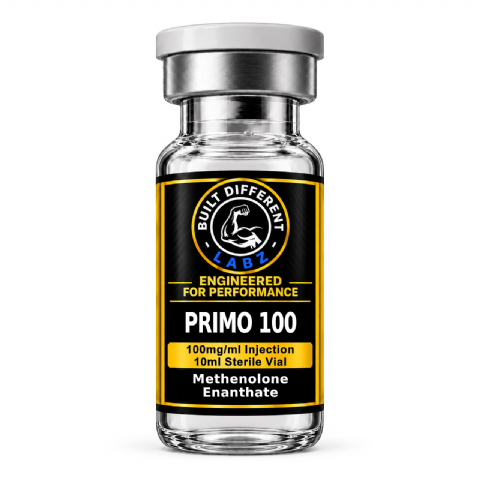
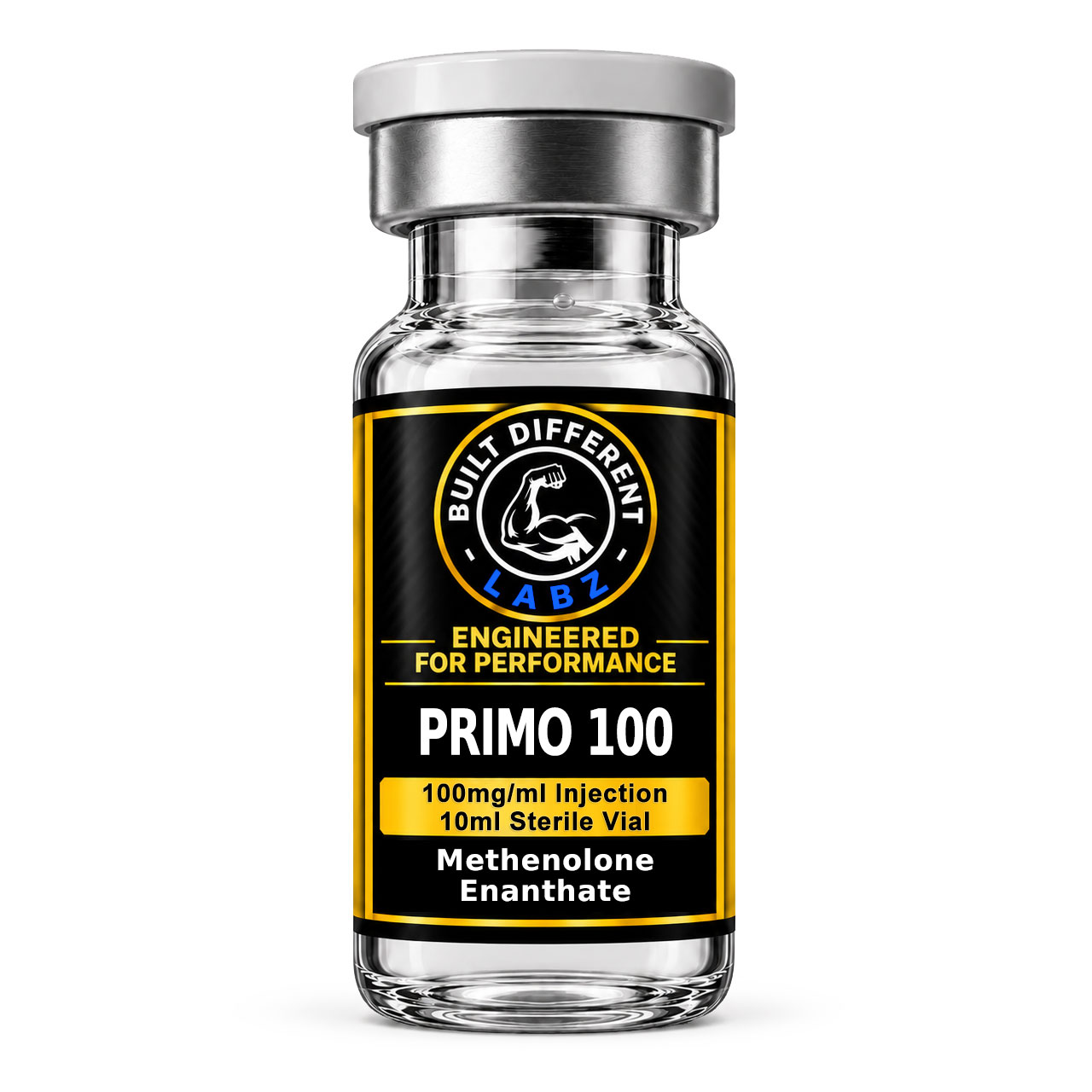
Methenolone Enanthate 100 is an injectable anabolic-androgenic steroid preparation commonly formulated to contain 100 mg of methenolone enanthate per milliliter. Methenolone enanthate is widely known by the historical brand name Primobolan Depot and is a long-acting esterified form of methenolone.
Compared with compounds such as trenbolone, methenolone generally has lower androgenic activity. It is also notable because it does not aromatize into estrogen. Despite its reputation as a comparatively "mild" anabolic steroid, it can still significantly suppress natural testosterone production and adversely affect cardiovascular risk factors.
Methenolone is a synthetic anabolic-androgenic steroid derived from dihydrotestosterone (DHT).
Methenolone enanthate consists of methenolone attached to an enanthate ester. The ester slows the compound's release from the injection site, creating a relatively prolonged pharmacokinetic profile.
Once the enanthate ester is removed, methenolone becomes available to interact with androgen receptors.
The ester therefore primarily controls release and duration rather than creating a different active steroid.
A concentration of:
Methenolone Enanthate: 100 mg/mL
means that each milliliter contains 100 mg of the complete esterified compound.
Because the enanthate ester contributes part of the molecular weight, 100 mg of methenolone enanthate does not represent 100 mg of methenolone itself.
Based on molecular weight, methenolone enanthate is approximately 69% methenolone, meaning 100 mg of methenolone enanthate corresponds to roughly 69 mg of methenolone after accounting for the ester.
This describes chemical composition and should not be interpreted as a dosing recommendation.
Methenolone enanthate has historically been marketed as Primobolan Depot.
Unlike trenbolone, methenolone has a history of human pharmaceutical use. Methenolone preparations have historically been used in certain medical situations involving severe wasting or catabolic states.
Availability and approved indications vary considerably between countries, and methenolone is not currently an FDA-approved medication in the United States.
Once active methenolone enters circulation, it interacts with androgen receptors in skeletal muscle and other androgen-responsive tissues.
Androgen-receptor activation influences gene transcription and can promote an anabolic environment involving protein metabolism and nitrogen retention.
These properties account for methenolone's ability to support lean tissue.
However, its anabolic activity should not be confused with an absence of systemic effects.
Methenolone has anabolic activity but is generally regarded as less potent in absolute effect than some highly androgenic anabolic steroids.
It has consequently developed a reputation in bodybuilding as a relatively mild compound.
The word "mild" can be misleading.
Methenolone remains an anabolic-androgenic steroid capable of suppressing endogenous testosterone and altering cholesterol and other cardiovascular risk factors. Lower androgenic activity does not make a steroid harmless.
Methenolone has historically appeared in two major ester forms.
Methenolone Enanthate is the longer-acting injectable form historically associated with Primobolan Depot.
Methenolone Acetate uses the shorter acetate ester and has historically been available in oral formulations.
Both ultimately provide methenolone. Their ester structure and formulation primarily change pharmacokinetics and administration characteristics.
Methenolone and testosterone are different hormones.
Testosterone is the body's primary endogenous male androgen and can be converted into both estradiol and DHT.
Methenolone is a synthetic DHT-derived anabolic steroid and does not function as testosterone replacement.
Although methenolone activates androgen receptors, using it does not maintain all of testosterone's normal physiological functions.
This distinction becomes particularly important because methenolone can suppress natural testosterone production without itself serving as a complete physiological substitute for testosterone.
One of methenolone's major pharmacological characteristics is that it does not aromatize into estradiol.
Methenolone therefore does not directly produce estrogen through aromatase in the manner that testosterone does.
This means estrogenic effects caused directly by conversion of methenolone to estradiol are not expected.
However, non-aromatizing does not automatically mean better or safer.
Estradiol performs important physiological functions in men involving bone health, sexual function, cardiovascular physiology, and other systems. Suppressing endogenous testosterone while having insufficient estrogen production can therefore create its own problems.
Because methenolone does not directly aromatize, it generally does not produce the same estrogen-mediated fluid retention associated with highly aromatizing androgen exposure.
This characteristic partly explains why methenolone became popular in physique-oriented settings where minimizing visible fluid retention was desired.
Changes in appearance or body weight, however, should not be interpreted as measures of cardiovascular or endocrine safety.
Methenolone still possesses androgenic activity despite its reputation as a comparatively mild steroid.
Potential androgen-related effects include:
Because methenolone is DHT-derived, androgenic effects involving hair and skin can still be relevant.
Individual genetics strongly influence these responses.
People genetically predisposed to androgenic alopecia can experience accelerated hair loss during anabolic-androgenic steroid exposure.
Methenolone's reputation as a lower-androgenic steroid does not guarantee protection from this effect.
Someone with strong genetic susceptibility to male-pattern baldness may experience substantially different effects than another person receiving similar exposure.
Methenolone can suppress the hypothalamic-pituitary-gonadal axis.
External androgen exposure creates negative feedback at the hypothalamus and pituitary, reducing LH and FSH secretion.
Reduced LH signaling causes the testes to decrease endogenous testosterone production.
Possible consequences include:
The fact that methenolone is often described as "mild" does not prevent HPG-axis suppression.
Reduced LH and FSH signaling can interfere with normal sperm production.
Depending on the extent and duration of suppression, sperm concentration can decline substantially.
Recovery following discontinuation varies considerably between individuals and cannot reliably be predicted according to a fixed schedule.
Anyone concerned about maintaining fertility should discuss fertility testing and preservation with an appropriate medical specialist before anabolic-steroid exposure.
One of the more important misconceptions surrounding methenolone is that a steroid with relatively mild androgenic effects must also be mild on cardiovascular health.
These are separate issues.
Anabolic-androgenic steroids can adversely affect lipid profiles, including:
Long-term AAS exposure can also contribute to increased blood pressure and adverse changes in cardiovascular structure and function.
Individual risk depends on exposure, duration, concurrent drugs, genetics, age, blood pressure, smoking, cholesterol, and underlying cardiovascular health.
Androgen exposure can stimulate erythropoiesis.
Hemoglobin and hematocrit can therefore increase during anabolic-steroid exposure.
Significant hematocrit elevations may become clinically important and warrant medical evaluation.
A complete blood count (CBC) can provide information about these changes.
Injectable methenolone enanthate is not a conventional 17-alpha-alkylated oral anabolic steroid.
It therefore does not have the same hepatic characteristics as many oral anabolic steroids specifically modified to survive first-pass metabolism.
That does not mean liver abnormalities should automatically be ignored during use. Persistent elevations in liver enzymes or other abnormal hepatic findings require appropriate medical investigation.
Methenolone is not generally characterized by a unique direct nephrotoxic mechanism.
However, anabolic-steroid exposure can indirectly influence renal health through changes in blood pressure, cardiovascular function, hematocrit, and other factors.
Kidney laboratory interpretation can also be complicated in muscular individuals because serum creatinine is influenced by muscle mass, resistance training, diet, hydration, and creatine supplementation.
Persistent renal abnormalities or protein in the urine warrant medical evaluation.
Androgens can affect the central nervous system.
Some individuals report changes involving libido, mood, irritability, anxiety, or sleep during anabolic-steroid exposure.
Methenolone's reputation as a less aggressive compound does not guarantee the absence of psychological or neurological effects.
Significant mood changes, depression, anxiety, aggression, or persistent sleep problems warrant medical attention.
As an injectable preparation, methenolone enanthate carries risks independent of the steroid itself.
Possible complications include:
Unregulated products introduce additional concerns involving sterility, contamination, incorrect concentration, and substitution with other compounds.
Progressively worsening redness, warmth, swelling, drainage, fever, or severe pain after an injection requires medical evaluation.
Potential adverse effects associated with methenolone/AAS exposure include androgenic hair loss, acne, oily skin, suppression of endogenous testosterone, reduced fertility, changes in libido or sexual function, unfavorable cholesterol changes, cardiovascular effects, increased hematocrit, and injection-related complications.
The absence of direct estrogen conversion means classic estrogen-mediated effects are less characteristic of methenolone itself, but it does not eliminate endocrine or cardiovascular risks.
Methenolone's reputation largely comes from several characteristics:
It has comparatively modest androgenic activity, does not directly aromatize into estrogen, is not a conventional 17-alpha-alkylated injectable steroid, and historically had legitimate pharmaceutical applications.
Those characteristics can make its adverse-effect profile different from compounds such as testosterone, trenbolone, or certain oral anabolic steroids.
They do not mean methenolone is risk-free.
Natural testosterone suppression and adverse lipid changes remain particularly important considerations.
Compound: Methenolone Enanthate
Common Name: Primobolan / Primo
Historical Pharmaceutical Name: Primobolan Depot
Common Concentration: 100 mg/mL
Drug Class: Anabolic-androgenic steroid
Active Steroid: Methenolone
Derivative: DHT-derived
Ester: Enanthate
Release Profile: Long acting
Approximate Methenolone Content: About 69 mg methenolone per 100 mg methenolone enanthate
Anabolic Activity: Yes
Androgenic Activity: Yes, comparatively lower than many AAS
Direct Aromatization to Estradiol: No
Progestogenic Activity: Not considered a significant characteristic
Suppresses Natural Testosterone: Yes
Can Impair Fertility: Yes
Historical Human Pharmaceutical Use: Yes
Current FDA Approval: No
Methenolone Enanthate 100 is a long-acting injectable anabolic-androgenic steroid historically associated with Primobolan Depot. Its enanthate ester provides prolonged release, while the active methenolone molecule produces anabolic and androgenic effects through androgen-receptor activity.
Its DHT-derived structure and inability to aromatize distinguish it from testosterone. These characteristics explain why methenolone is often described as producing less estrogen-related fluid retention and having a comparatively mild androgenic profile.
However, "mild" is relative. Methenolone can still suppress natural testosterone and fertility, negatively affect cholesterol and cardiovascular risk factors, produce androgenic hair and skin effects, and expose users to the risks associated with injectable and potentially unregulated products.
The distinction is therefore better understood as a different adverse-effect profile, rather than an absence of adverse effects.
We do not accept returns or issue refunds for any reason, beside manufacturing defects.
Feel free to contact us if you have any questions or concerns about our Return Policy.