We offer FREE SHIPPPING on all orders!
We offer FREE SHIPPPING on all orders!
| THIS PRODUCT IS INTENDED AS A RESEARCH CHEMICAL ONLY. This designation allows the use of research chemicals strictly for invitro testing and laboratory experimentation only. All product information available on this website is for educational purposes only. Bodily introduction of any kind into humans or animals is strictly prohibited by law. This product should only be handled by licensed, qualified professionals. This product is not a drug, food, or cosmetic and may not be misbranded, misused or mislabeled as a drug, food, or cosmetic. |
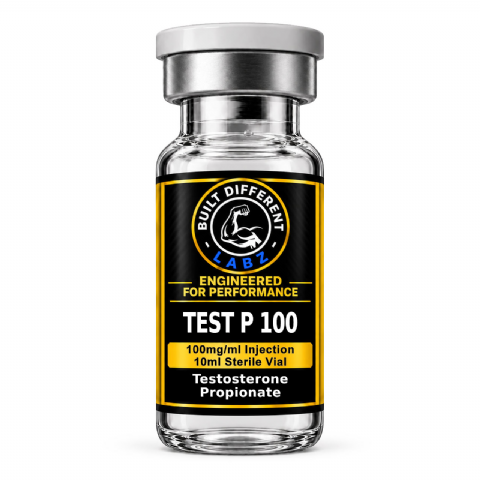
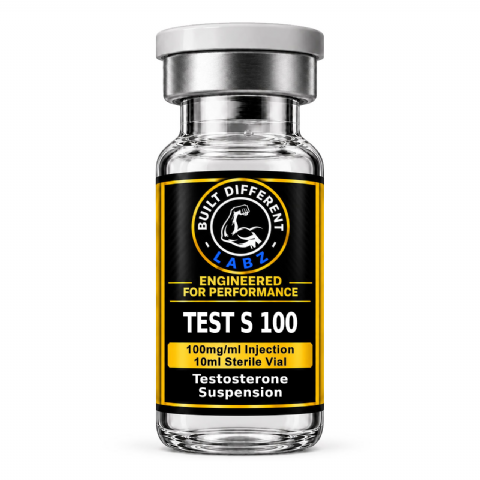
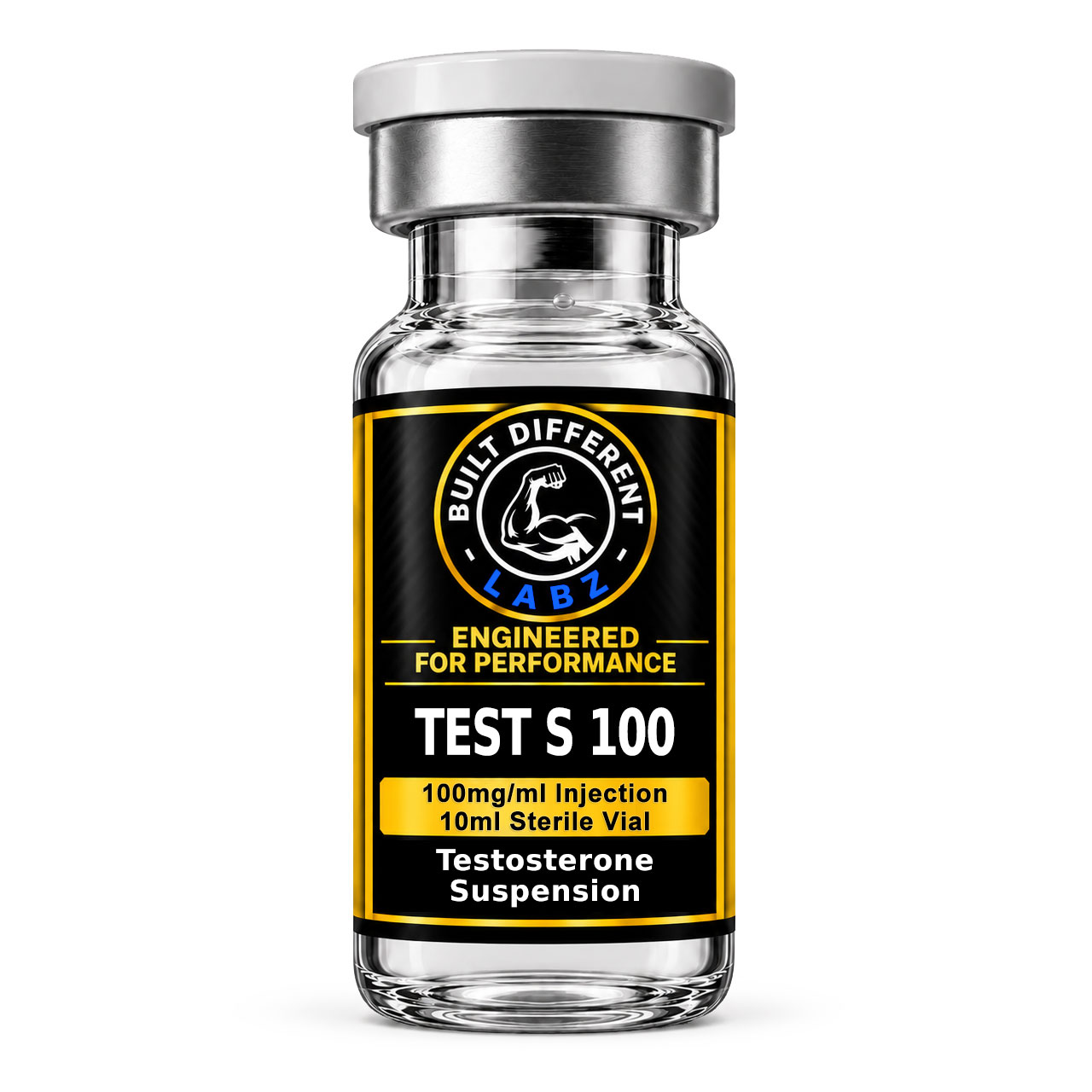
Testosterone Suspension 100 is an injectable testosterone preparation commonly formulated to contain 100 mg of unesterified testosterone per milliliter. Unlike testosterone cypionate, enanthate, or propionate, testosterone suspension has no ester attached to the testosterone molecule.
That distinction gives testosterone suspension a very different pharmacokinetic profile. It becomes available much more rapidly and has a substantially shorter duration of action than esterified testosterone preparations.
Testosterone suspension is essentially testosterone base suspended in a liquid vehicle. Traditional pharmaceutical preparations are water-based suspensions, although formulations can vary.
Most injectable testosterone products attach an ester to testosterone to slow its release. Testosterone suspension eliminates that ester entirely.
Once testosterone from the suspension becomes available systemically, there is no ester that first needs to be cleaved away. The biologically active molecule is testosterone itself.
A concentration of:
Testosterone Suspension: 100 mg/mL
means that each milliliter contains 100 mg of testosterone base.
This is an important distinction when comparing it with esterified testosterone.
With testosterone cypionate, enanthate, or propionate, part of the labeled weight belongs to the ester. Testosterone suspension contains no ester, so essentially the entire stated drug weight represents testosterone.
For comparison:
100 mg Testosterone Suspension: approximately 100 mg testosterone
100 mg Testosterone Propionate: approximately 84 mg testosterone
100 mg Testosterone Enanthate: approximately 72 mg testosterone
100 mg Testosterone Cypionate: approximately 70 mg testosterone
These numbers describe molecular composition and should not be interpreted as interchangeable dosing recommendations.
Testosterone suspension is one of the fastest-acting injectable testosterone formulations because it does not rely on a long ester to delay release.
Blood testosterone can therefore increase relatively rapidly following administration and subsequently decline considerably faster than with testosterone propionate, enanthate, or cypionate.
The absence of an ester is the defining pharmacological characteristic of testosterone suspension.
Once available in circulation, testosterone binds to androgen receptors throughout the body.
These receptors are found in numerous tissues, including skeletal muscle, bone, reproductive tissues, skin, hair follicles, and the central nervous system.
Androgen-receptor activation influences gene transcription and produces testosterone's characteristic anabolic and androgenic effects.
The testosterone molecule can also undergo two particularly important metabolic conversions:
Aromatization: Testosterone can be converted into estradiol by aromatase.
5-alpha reduction: Testosterone can be converted into dihydrotestosterone (DHT) by 5-alpha-reductase.
The absence of an ester does not prevent either pathway.
Testosterone is a potent endogenous anabolic hormone.
Androgen-receptor signaling in skeletal muscle can promote protein synthesis and nitrogen retention and contribute to increases in lean body mass, strength, and training adaptation.
Testosterone also influences recovery and the maintenance of muscle tissue.
These anabolic properties explain the historical use of testosterone and related anabolic-androgenic steroids for physique and performance enhancement outside approved medical treatment.
However, producing supraphysiologic testosterone concentrations is fundamentally different from medically replacing deficient testosterone. Greater androgen exposure can also increase cardiovascular, hematologic, endocrine, and reproductive risks.
These two preparations are sometimes grouped together because both have relatively rapid profiles, but they are chemically different.
Testosterone Suspension contains unesterified testosterone and therefore provides approximately 100 mg of testosterone for every 100 mg of testosterone base.
Testosterone Propionate attaches a short propionate ester to testosterone. Approximately 84% of testosterone propionate's molecular weight represents testosterone.
Propionate therefore remains an esterified testosterone despite being considerably shorter acting than enanthate or cypionate.
The difference becomes even greater when suspension is compared with long-acting esters.
Testosterone enanthate and cypionate are specifically designed to provide a prolonged release of testosterone following injection.
Suspension does essentially the opposite: it eliminates the ester responsible for extending release.
Importantly, these compounds ultimately produce the same active hormone. The primary difference is how testosterone is delivered into circulation and how long the formulation influences testosterone concentrations.
Testosterone suspension can aromatize into estradiol.
Because testosterone itself is the substrate for aromatase, eliminating the ester does not eliminate estrogen conversion.
Estradiol is physiologically important in men and contributes to bone health, sexual function, and other processes.
Excessive testosterone exposure, however, can increase estradiol production and potentially contribute to effects such as:
Conversely, excessively suppressing estradiol can produce its own adverse effects. Estrogen should therefore not automatically be regarded as something that should be eliminated.
Testosterone suspension can also undergo conversion to dihydrotestosterone (DHT).
DHT has strong androgenic activity, particularly in tissues such as skin, hair follicles, and the prostate.
Potential androgenic effects can include acne, oily skin, increased body or facial hair, and accelerated male-pattern hair loss in genetically susceptible individuals.
Individual genetic sensitivity can produce major differences in these effects between users.
The short duration of testosterone suspension does not prevent suppression of natural testosterone production.
Exogenous testosterone produces negative feedback through the hypothalamic-pituitary-gonadal axis.
The hypothalamus and pituitary can reduce GnRH, LH, and FSH signaling in response to external testosterone.
As LH decreases, the testes reduce endogenous testosterone production.
Therefore, testosterone suspension can substantially suppress the body's natural testosterone production just like longer-acting testosterone preparations.
Suppression of LH and FSH can also impair sperm production.
Possible consequences include reduced sperm concentration, very low sperm counts, azoospermia in some individuals, reduced testicular volume, and impaired fertility.
The rapid elimination of an individual testosterone formulation should not be confused with an absence of reproductive effects.
Anyone concerned about preserving fertility should discuss this specifically with an appropriate clinician before beginning testosterone therapy.
Testosterone stimulates erythropoiesis, increasing red blood cell production.
Hemoglobin and hematocrit can consequently increase.
Excessive hematocrit elevation can become clinically important, which is one reason CBC and hematocrit measurements are commonly incorporated into medical testosterone monitoring.
Potential cardiovascular and metabolic concerns associated with testosterone exposure include changes in blood pressure, fluid balance, hematocrit, and cholesterol.
Risk depends on the amount of androgen exposure, resulting hormone concentrations, duration, age, existing cardiovascular risk factors, and other health conditions.
The risk profile of medically supervised testosterone replacement intended to restore physiological concentrations should not be assumed to be equivalent to supraphysiologic anabolic-steroid use.
Testosterone suspension can behave differently at the injection site from conventional oil-based esterified testosterone preparations.
Because testosterone itself has poor water solubility, traditional water-based testosterone suspension contains microscopic testosterone particles suspended rather than completely dissolved in the carrier.
This formulation characteristic can contribute to localized injection-site discomfort or irritation in some individuals.
Significant swelling, progressive redness, warmth, severe pain, fever, or other possible signs of infection require medical evaluation.
Potential adverse effects associated with testosterone suspension include:
Individual response can vary substantially.
When testosterone is used medically, appropriate monitoring can include total testosterone, free testosterone or SHBG when clinically appropriate, CBC and hematocrit, blood pressure, and other testing based on medical history and individual risk factors.
Prostate evaluation may also be appropriate depending on age and individual circumstances.
Because testosterone suspension produces a relatively rapid concentration-time profile, the timing of a blood draw relative to administration can have a particularly large effect on the measured testosterone concentration.
A vial labeled 100 mg/mL describes the concentration of testosterone suspension.
It does not establish an appropriate dose or administration schedule.
The absence of an ester also means that a milligram-for-milligram comparison with testosterone cypionate, enanthate, or propionate can be misleading. Different formulations contain different amounts of testosterone per milligram and produce substantially different concentration-time profiles.
Compound: Testosterone Suspension / Testosterone Base
Common Concentration: 100 mg/mL
Drug Class: Androgen / anabolic steroid
Active Hormone: Testosterone
Ester: None
Approximate Testosterone Content: 100 mg testosterone per 100 mg testosterone base
Release Profile: Very short acting compared with esterified injectable testosterone
Anabolic Activity: Yes
Androgenic Activity: Yes
Aromatizes to Estradiol: Yes
Converts to DHT: Yes
Suppresses Natural Testosterone: Yes
Can Suppress Fertility: Yes
Administration: Injectable
Traditional Formulation: Water-based suspension
Testosterone Suspension 100 is fundamentally different from cypionate, enanthate, and propionate because it provides unesterified testosterone. There is no cypionate, enanthate, or propionate ester contributing additional molecular weight or extending the release of the hormone.
As a result, 100 mg of testosterone suspension represents approximately 100 mg of testosterone itself and produces a much more rapid concentration-time profile than long-acting testosterone esters.
Once in circulation, however, the hormone behaves as testosterone. It activates androgen receptors, can aromatize into estradiol, can convert into DHT, stimulates red blood cell production, and suppresses endogenous testosterone and sperm production.
The absence of an ester therefore changes the delivery and duration of testosterone, but it does not eliminate the systemic effects or risks associated with testosterone exposure.
We do not accept returns or issue refunds for any reason, beside manufacturing defects.
Feel free to contact us if you have any questions or concerns about our Return Policy.